Where Architecture & Sustainability Share a Blueprint
For today’s discerning traveller, architecture and sustainability sit at the centre of how a hotel is chosen, experienced and remembered. Increasingly, the most compelling stays are defined by how these two priorities are resolved through a single design approach, where materiality, spatial planning and environmental performance are considered together from the outset, and where the architecture itself becomes the mechanism through which impact is reduced and experience is shaped.
Across Slojourn Studio’s portfolio, architecture is developed from the conditions of place, shaped by landscape, climate and cultural context, and informed by regional building traditions and ways of living. Sustainability is not applied as an additional layer, but embedded in how each project is planned, constructed and operated, with design decisions consistently driving environmental outcomes.

Elements of Byron
Byron Bay, Australia
Designed by Shane Thompson, Elements of Byron is structured around the site’s four ecological systems – dunal, wetland, rainforest and eucalypt forest – with architecture organised to maintain the integrity of each diverse environ rather than displace them. Villas are single-storey and widely dispersed across the sprawling 50-hectare site, limiting ground disturbance to a 10% footprint, while communal facilities are expressed as sculptural pavilion forms defined by curved rooflines that reference surrounding dune topography.
Material selection and detailing draw directly from local environmental conditions, reinforcing a grounded architectural language that sits within the landscape rather than above it. This approach is matched by large-scale environmental regeneration, including extensive native revegetation and long-term restoration of dune and wallum systems, positioning landscape recovery as an outcome of the masterplan rather than a separate initiative.
The Mysa Motel
Gold Coast, Australia
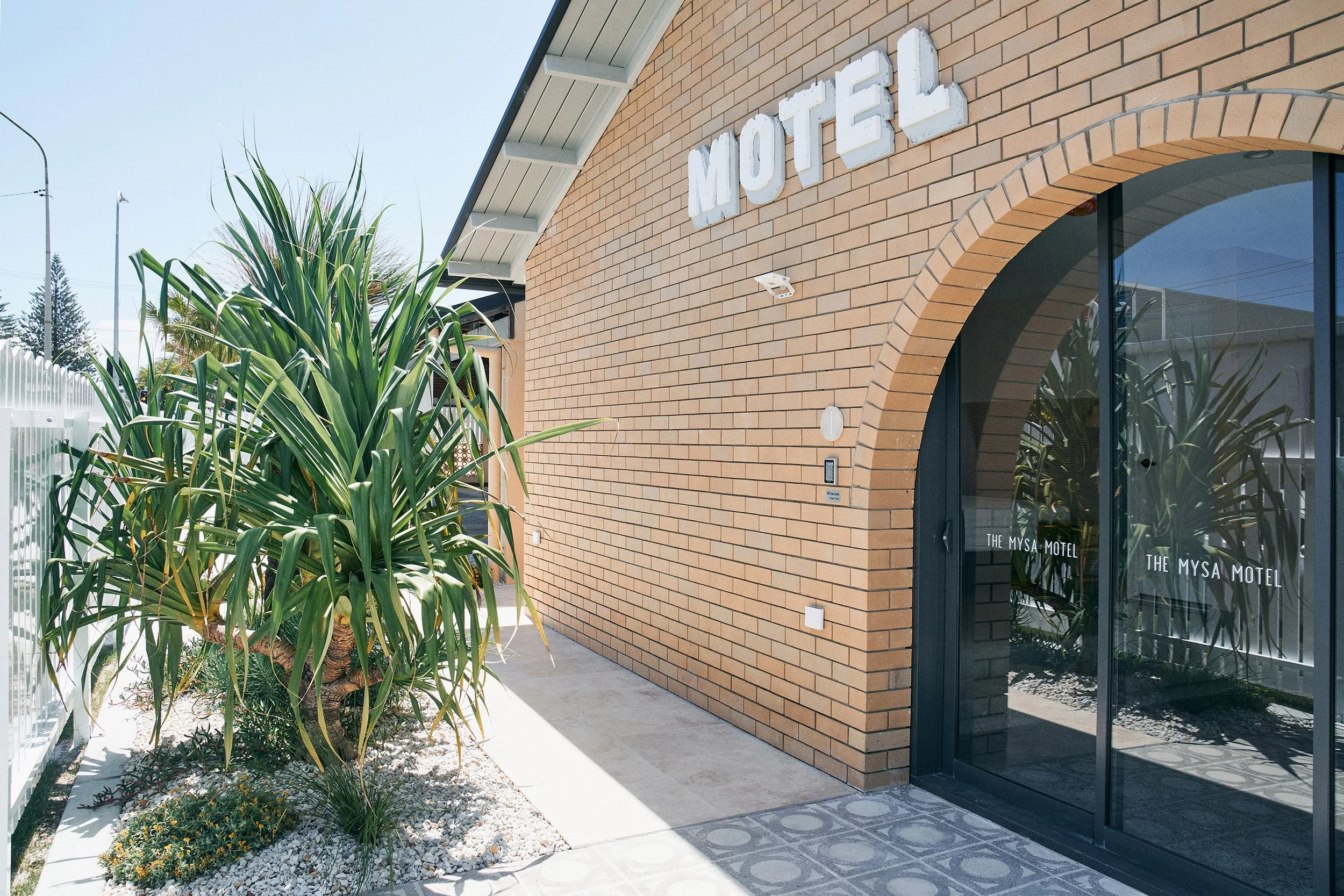
The Mysa Motel in Palm Beach reinterprets the Gold Coast’s mid-century motel architecture through adaptive reuse, retaining the original structural framework and working within its existing linear footprint. The design preserves key architectural characteristics of the era – open-air circulation, horizontal emphasis, kidney-shaped pool iconic of the motel movement, and direct engagement with outdoor space – while refining materiality and spatial detail to elevate the original building language.
By retaining and reworking the existing structure rather than rebuilding, the project significantly reduces construction impact while reactivating a distinct moment in the Gold Coast’s architectural history, positioning reuse as a design decision rather than a compromise.
Zannier Bãi San Hô
Vietnam
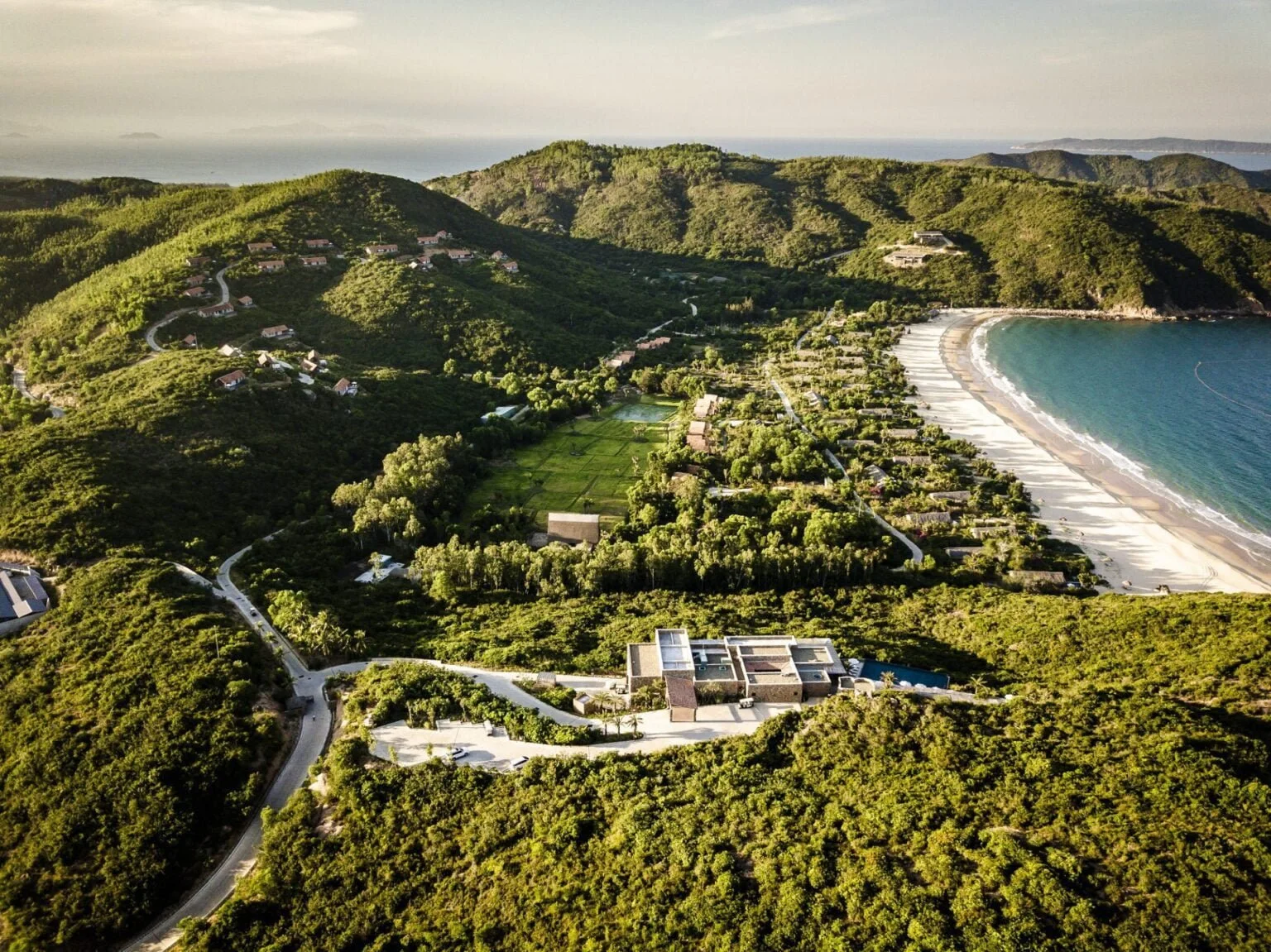
At Zannier Bãi San Hô, architecture is guided by founder, Arnaud Zannier’s, hands-on design philosophy, with villas conceived as interpretations of four traditional Vietnamese architectural typologies: coastal fishing villages, hill tribe dwellings, rice field houses and rural farm structures. Each typology informs proportion, materiality and construction method, creating variation across the site while maintaining a unified architectural logic rooted in local building culture.
Low-impact construction techniques, locally sourced materials and reduced reliance on imported finishes underpin the build process, while operational systems such as plastic reduction and on-site resource management support long-term preservation of the surrounding agricultural and coastal environment.
Song Saa Private Island
Cambodia
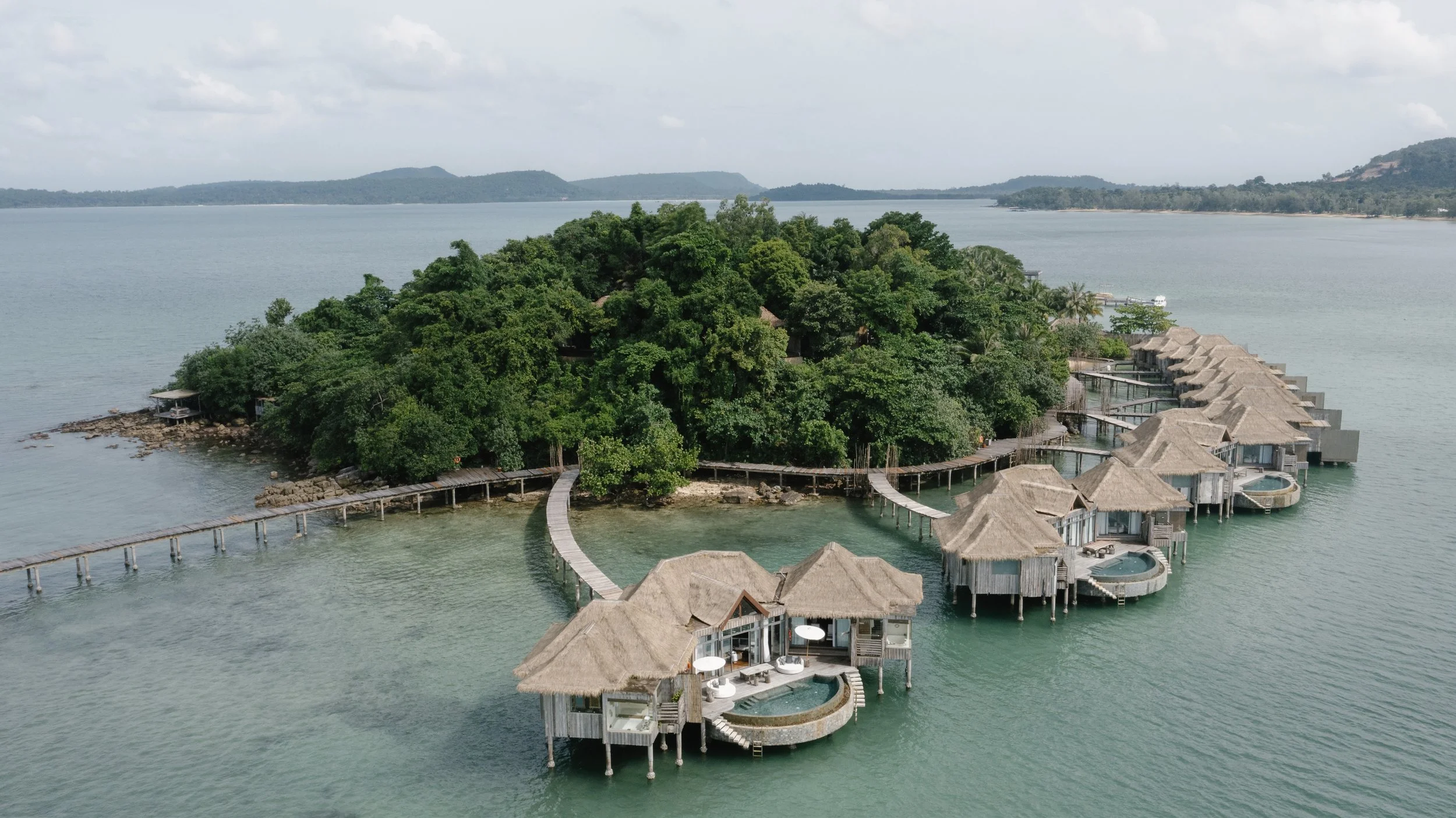
Song Saa’s architecture is shaped by the reuse of locally salvaged timber, reclaimed materials and elements sourced from traditional Cambodian fishing boats, creating structures that reference vernacular coastal building practices while reducing demand for new material production. Elevated forms, open-plan layouts and permeable structures are designed to respond to tropical conditions, prioritising natural ventilation, shade and airflow over mechanical systems.
This materially led approach is closely aligned with the work of the Song Saa Foundation, where marine conservation, habitat protection and community initiatives form part of the broader operational framework, ensuring the physical design of the resort and its environmental programs are directly connected.
Gundari
Folegandros, Greece
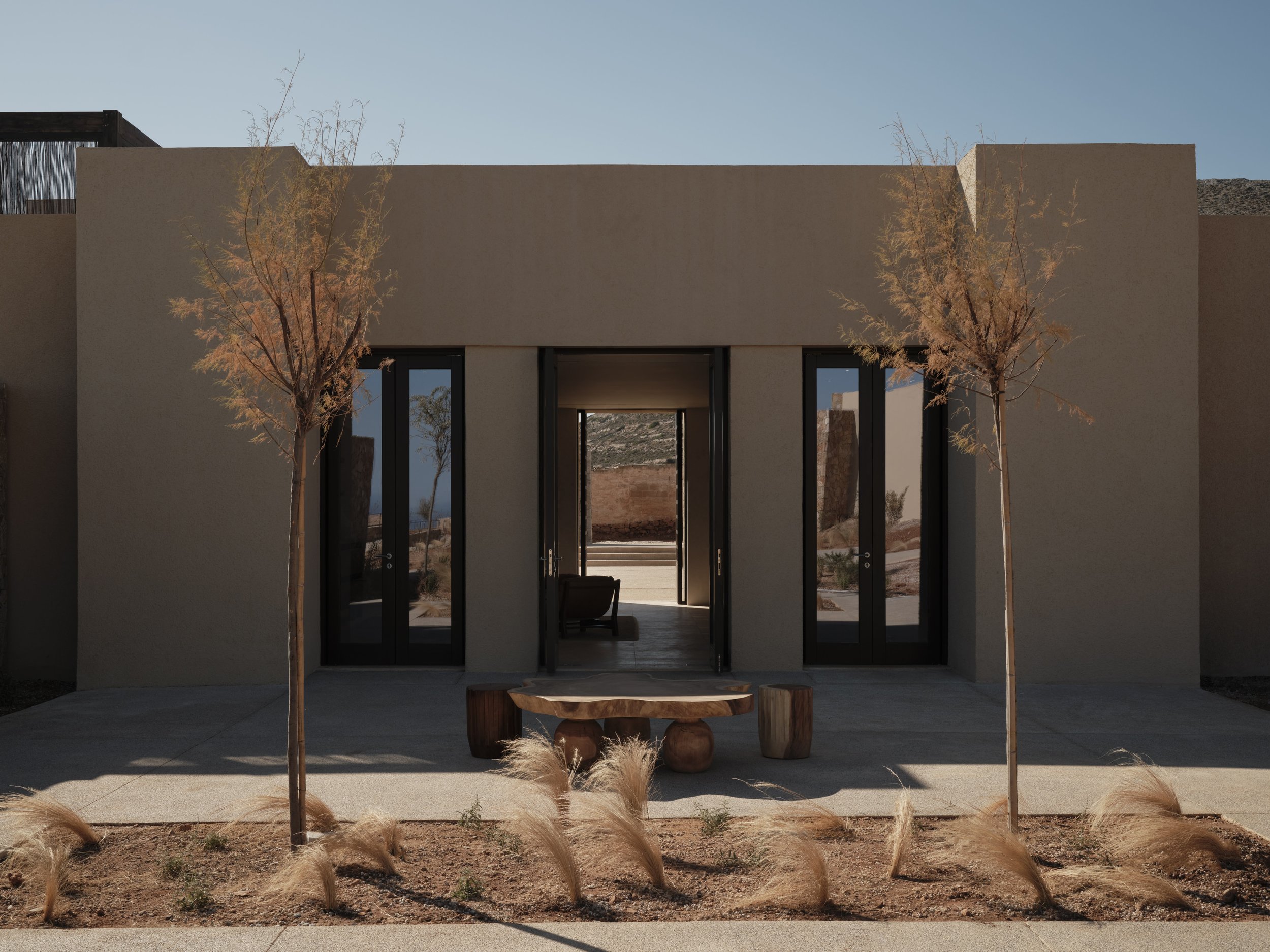
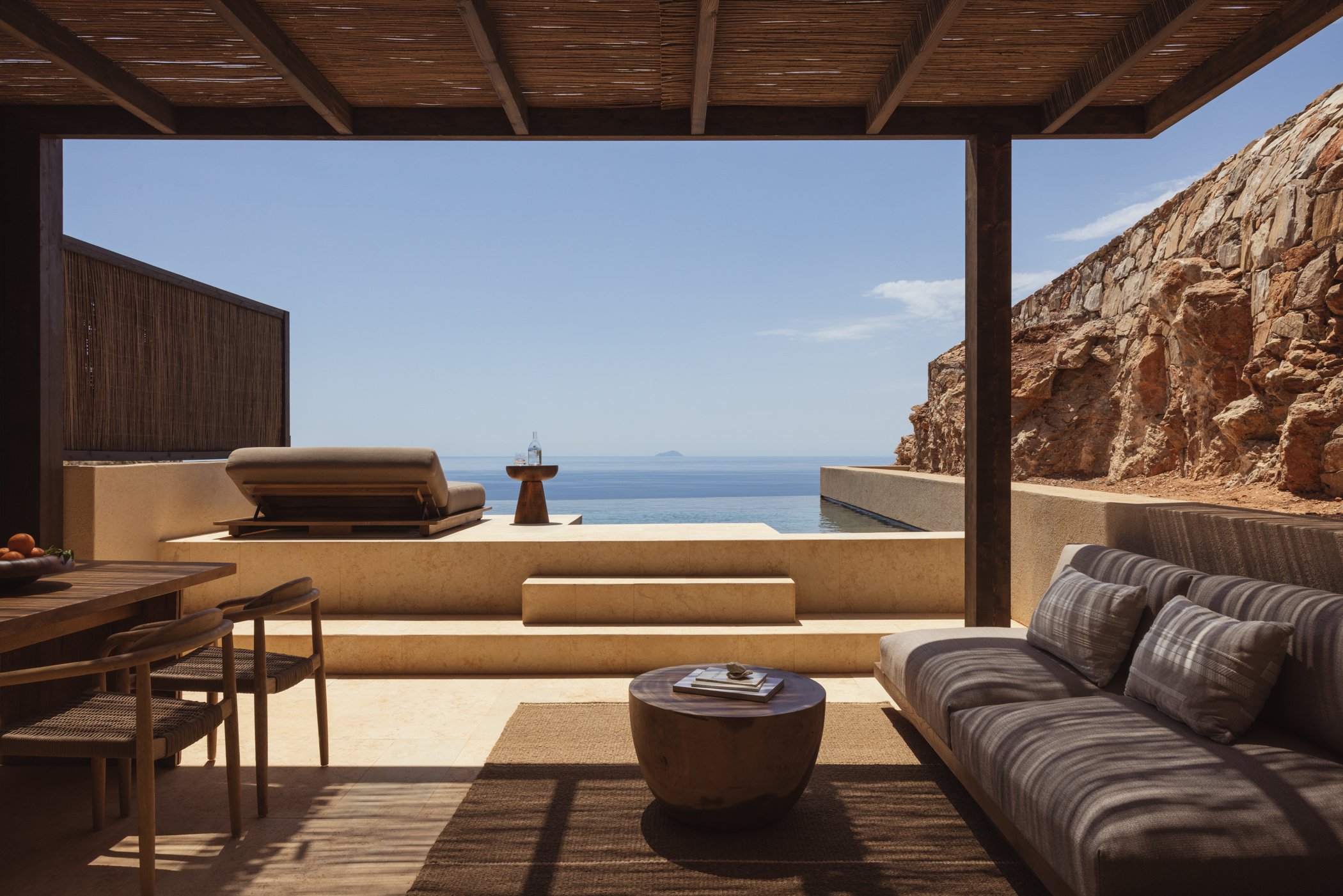
Designed by Block722 Architects, Gundari is embedded into the cliffscape of Folegandros through a composition of low, linear stone volumes that follow the island’s natural contours. The masterplan is split between partially subterranean suites and spa spaces carved into the terrain and an upper layer of restrained built forms, with earth-toned roofs and materials ensuring the architecture remains visually recessive within the landscape.
Stone excavated and reused on site forms the primary material language, while timber elements act as transitional connectors between interior and exterior spaces, reinforcing a continuous relationship with climate and terrain. Circulation is experienced as a sequence of open-air thresholds inspired by Cycladic village typologies, with water features extending the coastal landscape into the built environment and reinforcing environmental continuity across the site.
Daios Cove
Crete, Greece
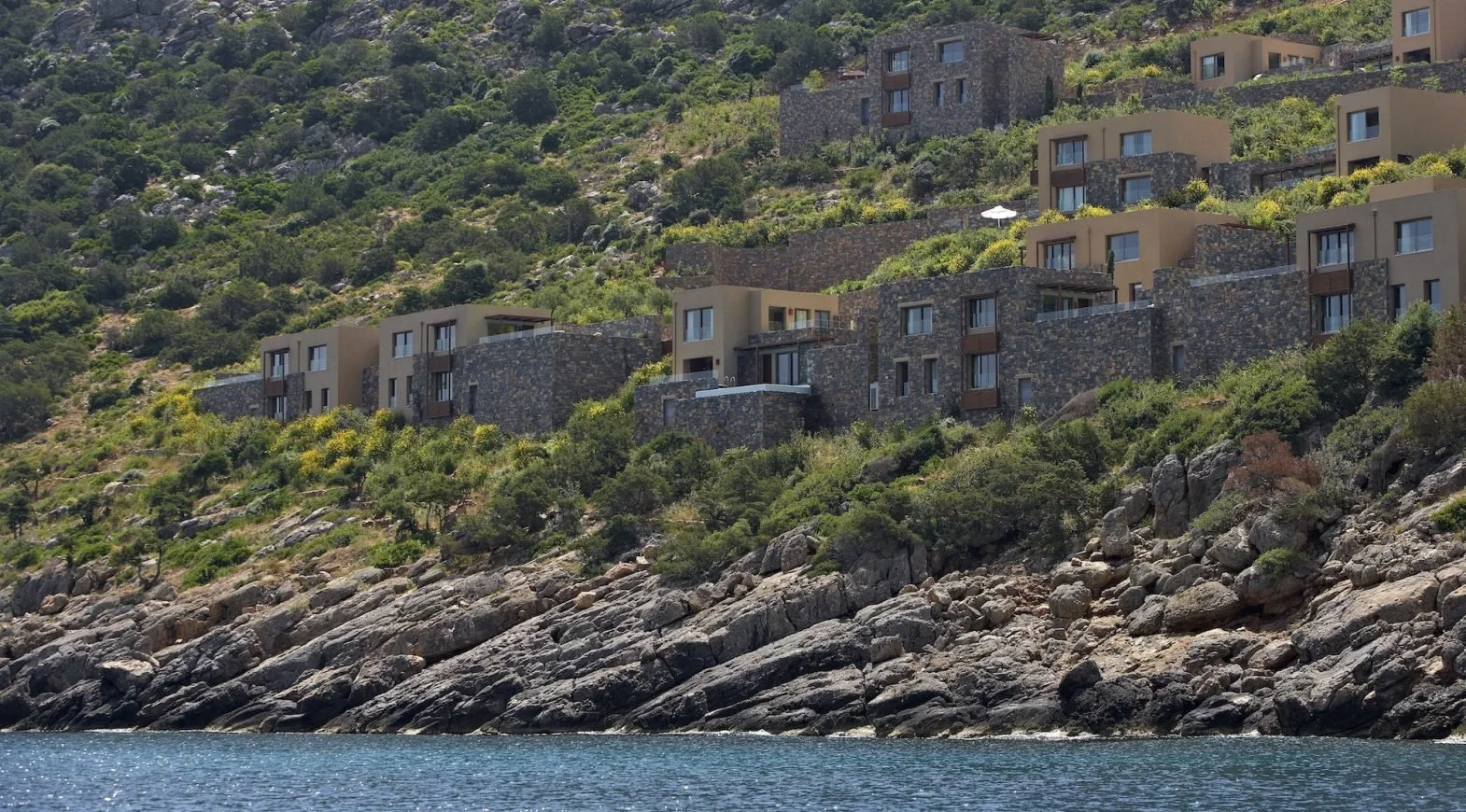
Daios Cove is conceived as an amphitheatre-like architectural composition that follows the steep natural gradient of its private bay, with stepped volumes cascading down the hillside to ensure each level maintains a clear connection to the sea. The masterplan avoids a singular massing strategy, instead distributing built form across the terrain to integrate with the existing topography.
This structural clarity is supported by integrated energy and water systems designed to manage high operational demand at scale, ensuring environmental performance is embedded into the infrastructure without disrupting the coherence of the architectural layout.

Andronis
Santorini & Paros, Greece
Across Santorini, Andronis properties are defined by architecture carved into the caldera, continuing the logic of historic Cycladic cliff settlements where built form is layered into steep terrain and movement occurs through interconnected pathways rather than formal corridors. This approach results in architecture that reads as an extension of the volcanic rock itself, shaped by excavation and massing rather than addition.
Suites are embedded directly into the cliffside, using thermal mass and subterranean placement to regulate temperature naturally and reduce reliance on mechanical systems. Privacy is a defining architectural outcome at Andronis – which is a rarity in a destination like Santorini – and is achieved through staggered levels, recessed terraces and controlled sightlines that allow each suite to operate independently within a dense built context.
This design language extends to Paros through Andronis Minois, where the same Cycladic principles are translated into a horizontal coastal typology expressed through sculptural white volumes, softened geometries and a direct relationship between built form and shoreline landscape.