
Bãi San Hô: Dispatch From a Regenerating Resort

It feels like the entire peninsula that sweeps below my villa is asleep. Most nights, I sit up at my laptop alone at a small window that presides over the Bay of Corals. I jot down notes and quietly replay voice recordings and bird sounds, reconciling the day past. My son and husband are asleep, tangled together. Tonight, I revel in the company of a handful of small round boats drifting beyond shore. They’re local fisherman, and they’re raising lobsters under neon green lights that bob with the changing ocean tide. I’m sure they are completely oblivious to me, up here on this hill. Or maybe they can see a small far-off light, and perhaps it's a sense of company for them, too.
My family and I are the sole guests in a 73-villa resort. In just a few hours, a hum of activity will resume just as it has at daybreak for the past five months, but for now, it’s just the fishermen and me, and a bright half moon.
We’ve spent the last three weeks on this quiet peninsula in Vietnam’s central Dăk Lăk province, where Zannier Bãi San Hô is scattered across 242 acres beside the glimmering East Sea.
In November 2025, Typhoon Kalmaegi made landfall on the resort’s crescent beach and swept inland, devastating the resort and nearby coastal villages. Torrential rain followed, swallowing rice paddies, roads and homes. Since the typhoon, the resort has remained closed to make way for slow, careful regeneration.
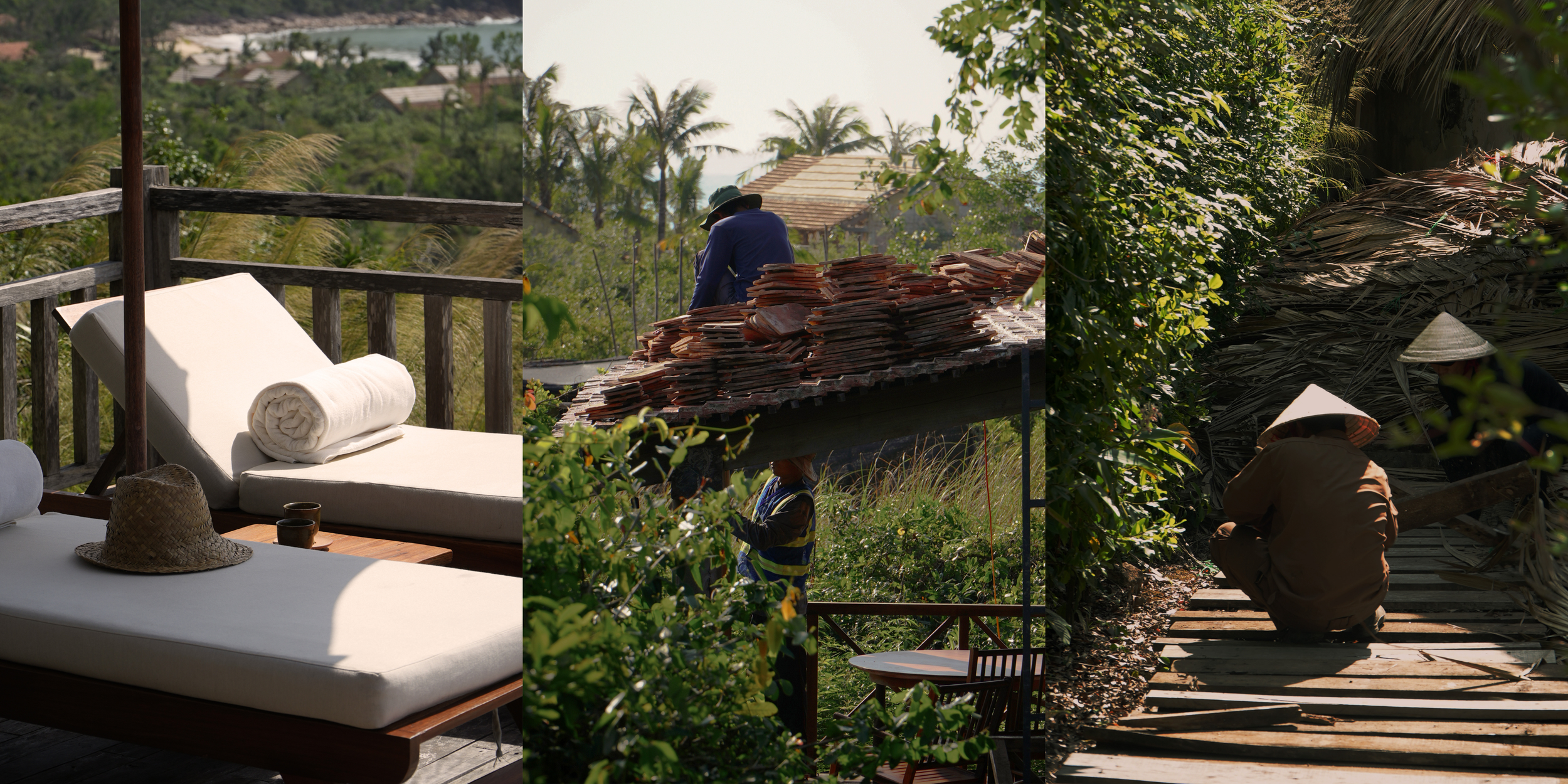
Every morning, hundreds of people arrive on foot or on brightly colored tuk tuks, with tools slung over their shoulders, scattering in all directions to rebuild and repair.
Those who have visited before will be familiar with the languid pace of the peninsula. As days here lend themselves to beachcombing, exploring the shallow house reef or idylling beside an ocean-facing pool, way up on the shrouded hill. But we’ve come to understand a different rhythm, one more akin to those who call this rocky peninsula home. We rise at dawn before the heat of the day; we pause for shared meals at long tables, where steaming soup is ladled into bowls and topped with handfuls of pungent Vietnamese mint and Thai basil. And this is why we came: to document the on-the-ground rebuild, to fold into the daily routines of those at the helm. Perpetual thatching, tiling, weaving, plastering and planting. The whir of machines and chatter that carries on the midday breeze.
Between pool-dips and photoshoots, I walk the length of the peninsula to seek out signs of progress. My daily walks lead me to the heart of Bãi San Hô, where a rice paddy field is flanked by stilted terrace houses made from wood, with piles of terracotta tiles waiting to be laid upon storm-damaged roofs. To the south is the towering roof of Bá Hai, a traditional Grandma Hai-style restaurant that, when open, tempts guests with traditional dishes cooked over fire – like Banh xeo – in a menu that meanders from Vietnam’s North to South. For now, evidence of the typhoon remains: a web of scaffolding bolsters the bamboo-and-rattan building, with a handful of men teetering on narrow footings as they replace the thatch.
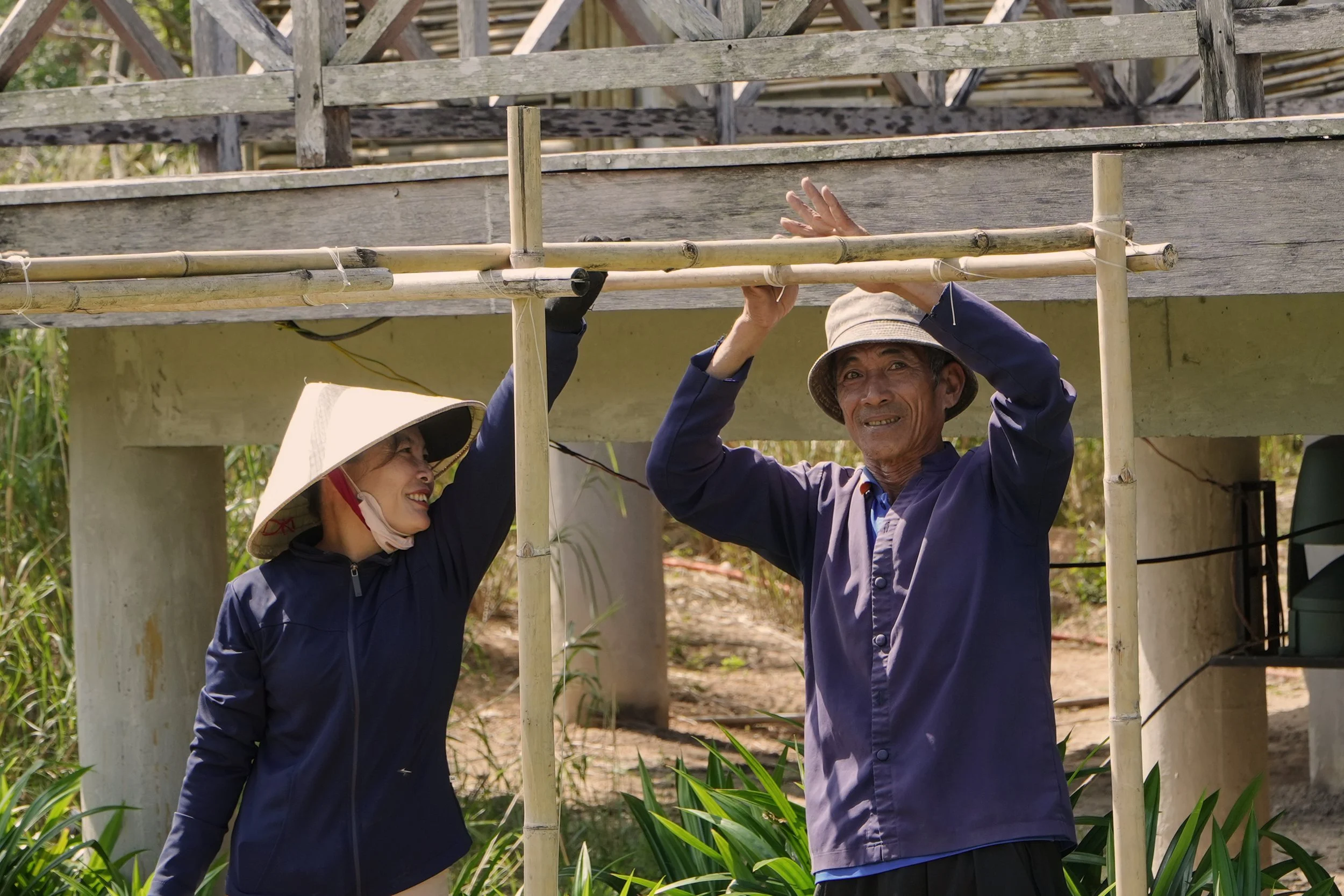
I met Mister Ðan Nguyen just after we arrived, weaving between a vegetable garden in sunbleached overalls just outside Bá Hai. Mister Ðan is part of a team reviving the property’s semi-arid coast landscape. We amble along the garden together despite not speaking the same language. He gestures toward rows of trees and plants, destined to revive the sparse beachfront. Nearby trees hang heavy with ripe papayas, and vines boast bright green zucchinis. Come opening, 23,500 shrubs and trees will be replanted across the peninsula, just in time to welcome the resort’s first guests.
In the days before opening, we explored in awe of the renewal – the repaired stone, the endless thatched roofs, and a regenerated beach where the oceanfront Lang Chai restaurant was rebuilt from scratch.
As construction slowed, nature began returning. Pool-swooping swallows, camera-shy coucals, and tiny kingfishers that dart between clifftops and trees. Lizards bask in the sun and flittering butterflies, from tiny yellow specks to some the size of small birds, all dance in the ocean breeze.
I learn that in this part of the world, typhoons and storms are par for the course. And it’s a thought I couldn’t shake after witnessing the seemingly endless rebuild. One afternoon over fragrant pork Bahn Mi in the staff kitchen, I asked Alain, the resort’s general manager, what would happen if a typhoon struck again. He shrugged and said plainly, “We’ll rebuild.”
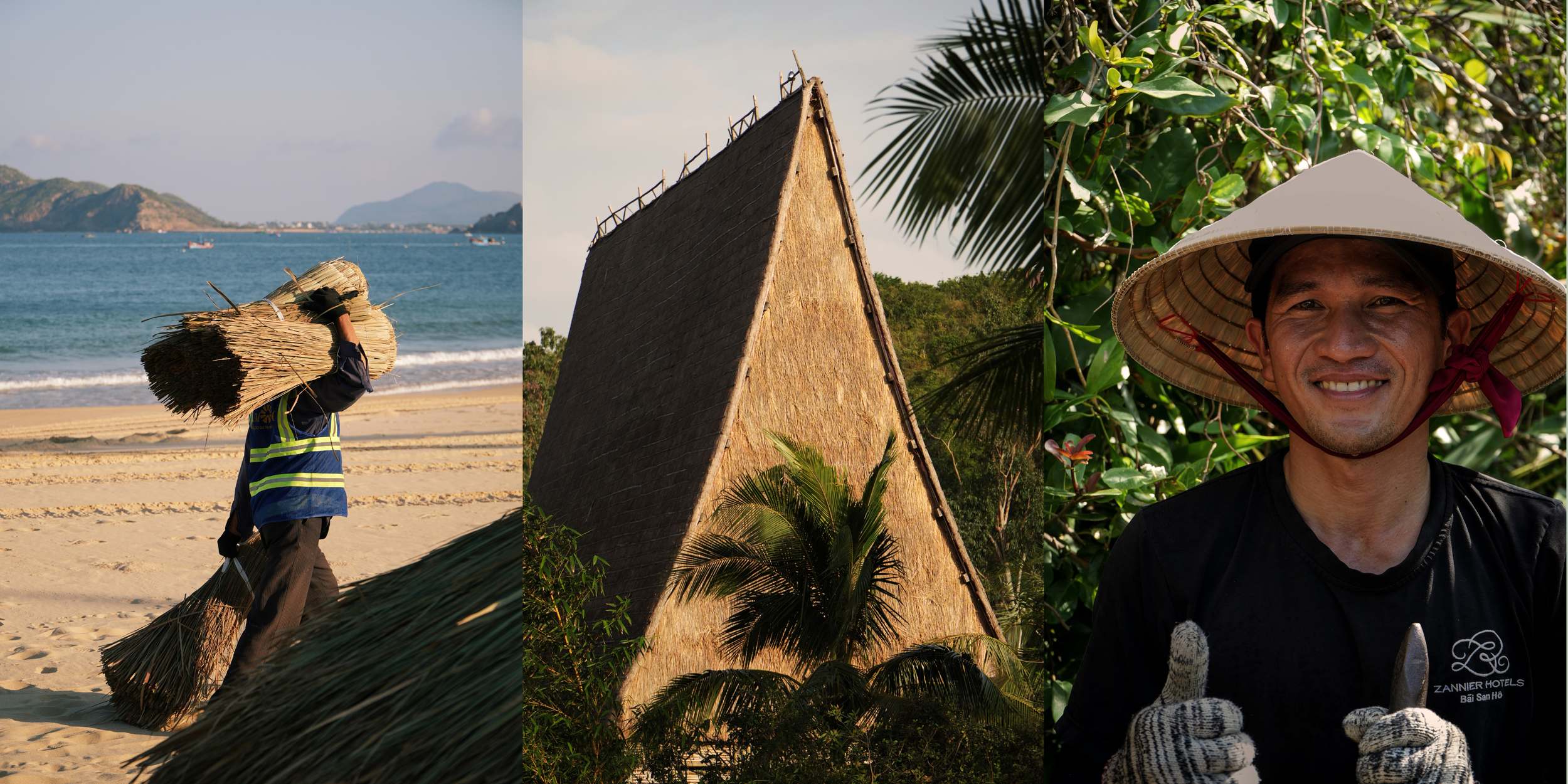
Later we meandered through the nearby villages, where homes and businesses succumbed to the storm. Five months on, it’s clear that the wrath of the storm was no match for the people of the close-by Hoa Hoi village, many of whom are employed at the resort. Day after day, scooters and pedestrians navigate around the leftover rubble and debris, work continues until nightfall. Shops reopen, locals gather, fishermen trawl the sea. Life simply carries on. And here it seems, it’s an ingrained, resilient spirit that spurs both land and people to weather the storm.
A few days later, we’re first on-site for the resort’s much-anticipated reopening. I lurk in the background as other guests arrive from near and far. I descend to the subterranean Hoa Sen Spa where I road-test an oil massage with bamboo rollers. I emerge in a daze to syrupy Vietnamese iced coffees at the breezy Lang Chai restaurant.
For anyone else sitting here beneath newly-thatched beach umbrellas sipping a local 333 beer, Bãi San Hô seems just as before – a paradisical world of its own. But beyond the idyllic beach and the newly pressed uniforms, there’s a five-month-long story of devastation and grit, a community set on rising again.


All images also by the beautiful Amber Hunter (@hunterandijournal).